Common Omnichannel Follow-Up Mistakes By Financial Advisors
Stop Letting Warm Prospects Go Ice Cold
Right now, mid-year reviews and tax planning are on a lot of minds. People are checking old 401(k)s, thinking about capital gains, and wondering if their advisor is really paying attention. That means more high-intent prospects are quietly looking at marketing for financial advisors and comparing options, even if they are not saying it out loud yet.
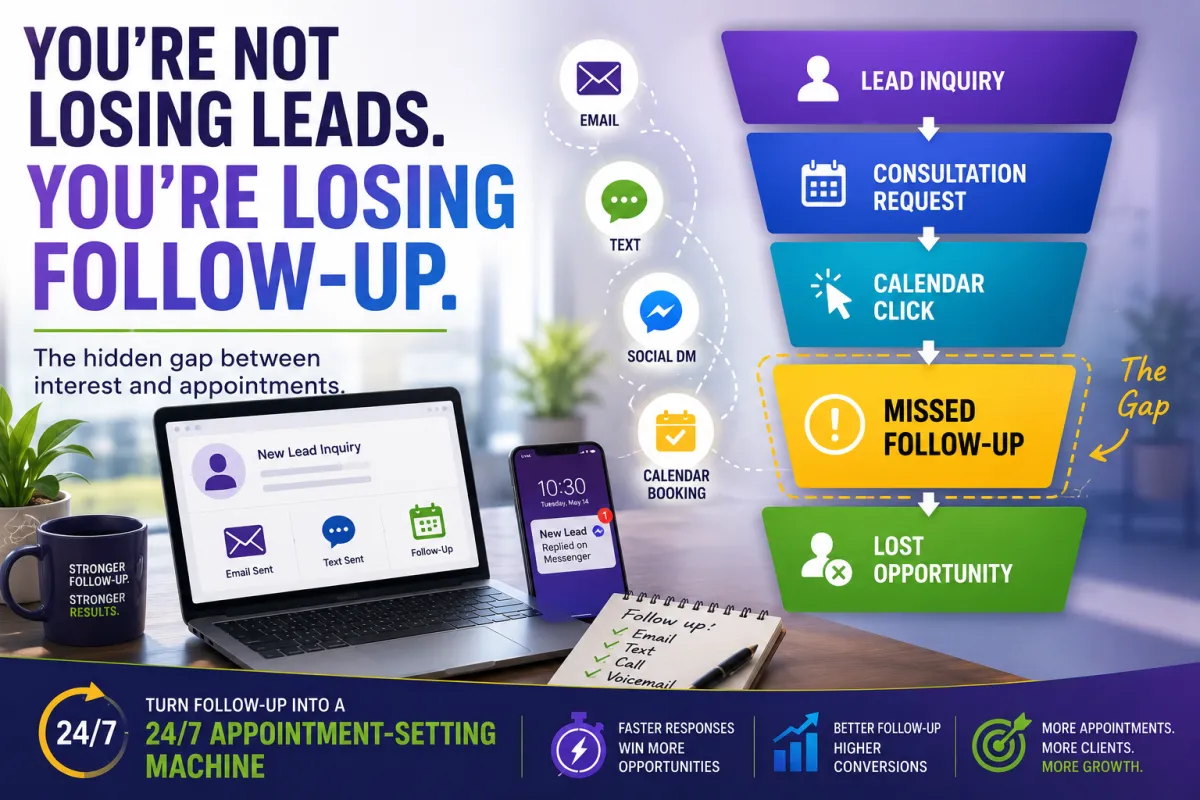
The problem is not always lead generation. Often, it is what happens after the first opt-in, quiz, or consult request. A prospect fills out a form, downloads a guide, or clicks on your calendar link, then the follow-up goes slow, goes random, or just stops. By the time someone gets back to them, they have cooled off or picked another advisor.
Omni-channel follow-up is how we fix that. It is not about blasting the same message everywhere. It is a coordinated set of touchpoints across email, SMS, voicemail drops, social DMs, and retargeting, all working together, guided by AI. When we avoid a handful of common mistakes, advisors can revive a surprising share of “no response” leads without adding more manual work or late-night inbox time.
The Silent Lead Killer: Inconsistent Follow-up Timing
Response speed shapes how a prospect feels about your practice. People are used to quick confirmations, instant replies, and clear next steps. When someone takes a step toward working with you, even waiting a few hours can feel like being ignored.
The big timing mistake we see is not just being slow; it is being uneven. For example:
An email reply goes out fast, but the promised text follow-up shows up days later
SMS reminders go out on time, but nobody checks DMs on social for a week
A prospect clicks your calendar, does not book, and never gets a second-chance message
To a prospect, that feels scattered. It sends a signal that things behind the scenes might be disorganized. If follow-up is all over the place, will advice and reviews be that way too?
AI can clean this up with:
Central timing rules that fire near-instant replies on every channel
Pre-built sequences that react to actions like opens, clicks, and replies
Quiet hand-offs so a live human steps in when needed, at the right moment
The end result is follow-up that is fast, steady, and human, instead of random bursts of “just circling back” messages.
One-Size-Fits-All Messages That Ignore Buyer Intent
Another big mistake is sending the same follow-up to everyone. A pre-retiree worried about income has different questions than a business owner thinking about tax planning or a family that just sold a property. When all they get is a generic “checking in, want to book a call?” message across every channel, trust starts to crack.
Buyer intent matters. People at different stages want different things:
Early-stage: clarity, education, simple next steps
Mid-stage: proof you understand their situation, examples of how you work
Late-stage: quick answers, urgency, and an easy way to say yes or no
When messages ignore that context, they feel like spam, even if the timing is great.
AI-driven personalization can fix this without adding daily writing tasks to your plate. We can pull in:
Lead source, like which ad or page they came from
Answers from quizzes or intake forms
Calendar data, such as “interested but did not pick a time”
Content they engaged with, like a retirement guide or tax strategy video
Then AI drafts channel-specific follow-ups that sound like you, match their urgency, and speak to their situation. The message that goes to a business owner who clicked on a tax guide should not sound like the one going to a pre-retiree who booked and then canceled a call.
Treating Channels Like Silos Instead of a Journey
Many advisors treat each channel like a separate bucket. The email tool does its thing, the SMS tool does its thing, social DMs are checked when someone remembers, and retargeting is just running in the background. The result is often:
Repetitive messages that say the same thing three different ways
Conflicting calls to action that confuse the prospect
Gaps where no one follows up at all for days or weeks
Instead, think of omni-channel follow-up as a simple path. Each channel has a clear job:
Email: education, stories, and deeper explanation of your process
SMS: quick nudges, reminders, and micro-commitments like “hit reply with yes”
Social DMs: personal touch, short voice notes, light Q&A
Retargeting: staying visible so you are not forgotten between touches
AI makes this easier by unifying all those touchpoints into one workflow. When someone clicks a retirement guide in an email, that action should update what happens next on SMS or social. Maybe they get a short text with one key question about their retirement timeline, not another generic “did you see my email?” note.
This kind of sequencing helps prospects feel guided instead of pestered. They see a clear path from first click to booked review, without you having to babysit every step.
Ignoring Follow-up Metrics and Letting Gut Feel Lead
Many advisory teams make decisions based on gut feel. It feels like the follow-up is heavy, or it feels like people do not like SMS, or it feels like everyone goes quiet in the summer heat. The problem is, feelings are not data.
Without tracking, it is easy to:
Overuse low-performing channels that eat time
Underuse channels that quietly book the best meetings
Miss seasonal patterns like mid-year tax planning surges
AI can surface the signals that matter, such as:
Which subject lines get replies from serious prospects
Which SMS prompts lead to booked calls instead of silence
Which voicemail drops wake up “ghosted” leads in a good way
With those insights, the system can auto-test small tweaks in timing, wording, and channel order. It keeps improving month after month, while you stay focused on client meetings instead of dashboards.
Turn Your Follow-up Into a 24/7 Appointment Engine
When we fix timing, personalization, channel sequencing, and measurement, something simple happens. Existing leads start turning into booked appointments and held reviews, without more staff hours or late-night follow-up sessions. You stop losing warm prospects to gaps and delays, especially around busy seasons like mid-year reviews and tax planning.
A practical first move is to choose one niche, like pre-retirees in the 55 to 65 range, and map their current follow-up path. Then plug in AI-powered omni-channel sequences that run in the background while you are in meetings, at kids’ games, or out of town for a long weekend. Over time, this kind of system can help advisors stop leaking warm leads and start compounding AUM with the opportunities they already have.
Boost Client Growth With Targeted Advisor Marketing
If you are ready to attract more ideal clients and streamline your lead generation, we can help you build a strategy tailored to your practice. At Click Automations, we focus on data-driven marketing for financial advisors that turns prospects into long-term relationships. Let us map out the systems, messaging, and automation you need so you can spend more time serving clients and less time chasing leads. Reach out today to see what we can build together for your firm.
Tamra Millikan is a Stanford Certified AI Consultant and founder of Click Automations, a done-for-you lead generation and AI automation agency helping service businesses and expert advisors convert more leads without working more hours.


